
 Bindii is one of the most annoying weeds and the bane of everyone who loves to go barefoot outdoors in the warmer weather during spring and summer.
The prickles are the dried seeds of the Bindii (Soliva sessilis) plant and can easily become caught in clothing, socks, toys and the feet and fur of pets, spreading the seeds to other parts of the garden.
It is common in lawns, parks, footpaths, gardens, pastures, roadsides and disturbed sites.
The best way to control Bindii is to start early, tackling plants in winter or early spring when they are very small.
Depending on where you live, Bindii might be known as Lawnweed, Common Soliva, Onehunga weed or Field Burweed.
It’s also a common name for several other weeds which can make identifying it difficult.
Other weeds known as Bindii include:
- Tribulus terrestris, otherwise known as Caltrop, Cathead and Goathead.
- Emex australis, which also has the common names Three Corner Jack, Spiny Emex, Double Gee and Devil’s Thorn.
What to look for
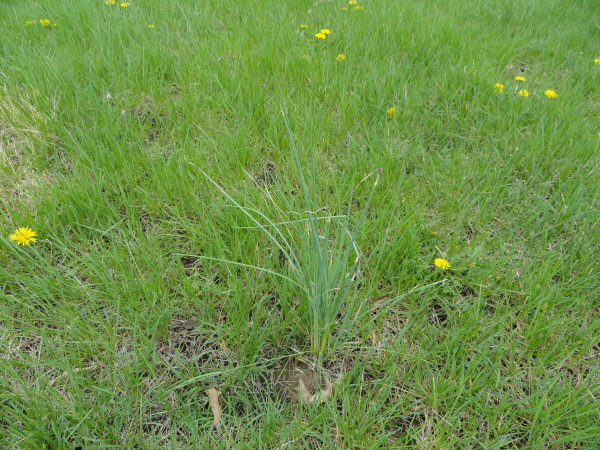
 In this case, Bindii is a fast-growing annual herbaceous weed that germinates in winter. One of its distinguishing features is the feathery leaves which can look like parsley or carrot tops.
Along with Clover and Wintergrass, it’s often one of the greenest patches in your lawn when July rolls around.
Bindii develops first as a rosette, followed by leaf-bearing creeping green stems up to 8cm long which put out roots and produce more rosettes. Both leaves and stems are covered in soft hairs.
Small flower heads form near ground level or in the leaf forks of stems in late winter and spring, and the clusters of fruit have sharp upward-pointing needles.
How to get rid of Bindii in your lawn
 In common with many weeds, the best results are achieved when Bindii plants are small.
Because of their prostrate habit, they’re often too low to mow without scalping your lawn which is the last thing you want to do because it encourages Bindii to spread even further.
There are two main ways to get rid of Bindii; manual and chemical.
Manual control of Bindii
After the rain, when the ground is softer, both large and small Bindii plants can be pulled out by hand – preferably before seed formation.
Loosen the soil around the plant with a gardening fork and take care to remove as many of the roots as possible. Dispose of the plants in the bin to avoid them reshooting.
You could also try pouring boiling water on Bindii plants or use a device that produces steam or a gas flame to kill weeds. Another DIY solution is to mix 40ml of iron sulphate – available from a nursery or garden centre – with 4.5 litres of water and spray it on the weeds.
If Bindii plants have already developed seeds or you’re dealing with a large infestation and hand removal is not practical, you might have to spray with a selective herbicide.
Chemical control of Bindii
 Depending on the maturity of the plants and how large an area is affected, it may be necessary for you to spray more than once.
Glyphosate can be effective on Bindii, but as a non-selective herbicide it will poison everything it touches, including the lawn. Selective herbicides are less dangerous to your lawn.
Before using any herbicide, check product labels to make sure they’re suitable for the type of grass you have and follow the instructions and safety directions.
Always wait a few days after spraying before watering or mowing.
Recommended products
Indigo Duke 100WG 100gm
Indigo Contra M 1L
Bow and Arrow 500mL
Oxafert 20kg
If Bindii has been a problem in previous years, using a weed and feed product, such as Oxafert, in autumn can help nip it in the bud and stop a new generation of weed seeds from germinating
How to prevent Bindii in your lawn
 A healthy, dense lawn is the best defence against all weeds, regardless of the type of grass you have.
A solid maintenance program will go a long way to helping your lawn resist intrusion by Bindii, which thrives in hard compacted areas with low nutrient levels.
Make sure your lawn care program includes regular:
- Deep watering in the morning.
- Mowing at the right height.
- Fertiliser application.
- Aeration of the soil.
The Ultimate Turf Maintenance and Lawn Care Guide has lots of useful tips and you can browse the myhomeTURF online store for a range of leading lawn care products.

 Shade
Shade Maint.
 Drought
 Wear
Wear $12–$18/m²