
 Dandelions are a perennial herb that gardeners either love or hate.
Some people loathe Dandelion Weed with a passion because it can reappear in lawns year after year, despite meticulous attention to broadleaf weed control.
Others deliberately grow Dandelions because the entire plant is edible, with a flavour described as slightly bitter and similar to Chicory.
The leaves (called Dandelion Greens) can be eaten cooked or raw in soup or salad, and the flowers can be turned into Dandelion wine.
Dandelion leaves and roots are dried and used to make herbal tea and coffee, and the root is used in traditional medicine as a treatment for stomach and liver conditions.
The common name Wet-the-Bed is a childhood nod to its diuretic effects. It’s not an old wives’ tale: research has found one of the compounds found in Dandelion flowers can cause people to urinate more often.
What to Look For
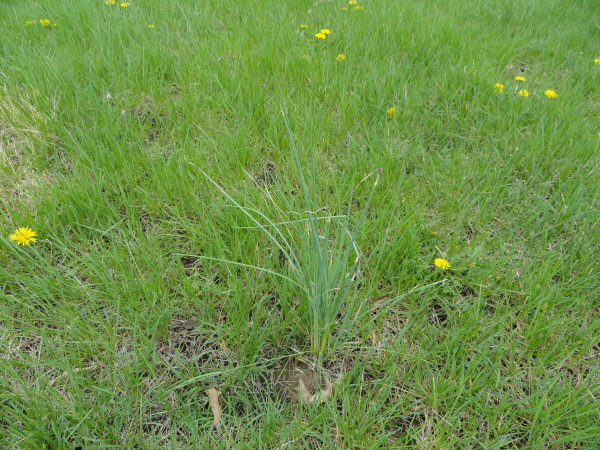
Dandelion Weeds have distinctive mid-green jagged leaves that form rosettes and slender stems that exude a milky sap.
Plants can become dormant in winter, regrowing when temperatures begin to rise again.
In spring the bright yellow flowers of Dandelion Weeds turn into a white puffball of seeds which float away on a breeze, or when children blow them into the air to make a wish.
Dandelions also put out a long tap root that can extend 25cm or more.
This allows plants to compete against your lawn for water and nutrients and makes control twice as difficult.
Not only do you have to get rid of the Dandelion roots to prevent regrowth, but an eagle eye is required to stop plants growing in the following years from seeds blown in from the neighbour’s yard or a kilometre or more away.
How to Get Rid of Dandelion Weeds in Your Lawn
Dandelions tolerate low mowing height and can be difficult to control because of the long tap root from which they can regrow.
There are two main methods for Dandelion Weed control: manual and chemical.
Manual control of Dandelion Weed
Relatively small Dandelion Weeds plants can successfully be removed by hand, using a fork to first loosen moist soil or a sharp spade to carefully dig up the plant, making sure to collect any pieces of root that break off along the way.
Chemical control of Dandelion Weed
 Depending on the maturity of the Dandelion Weeds plants and how large an area is affected, it may be necessary for you to spray more than once.
Glyphosate can be effective on Dandelions, but as a non-selective herbicide it will poison everything it touches, including the lawn.
Selective herbicides are less dangerous to your lawn.
Look for products containing these active ingredients:
- Halosulfuron-methyl
- Mecoprop and dicamba (not suitable for Buffalo lawns)
- Dimethenamid-P and pendimethalin.
- Bentazone, MCPA and dicamba (not suitable for Buffalo lawns)
- Bromoxynil and MCPA (some soft leaf Buffalo varieties are sensitive)
Products containing more than one active ingredient will usually act as both a contact and a systemic herbicide. This means they kill on contact as well as being absorbed by the Dandelion plant and translocated into growing points, including the roots. The plants must be actively growing and not under any stress for them to work.
The organic product BioWeed, which is based on pine oil, claims to be able to control Dandelion Weeds when applied at the one to four true leaf growth stages.
Wait a few days after applying any herbicide for the leaves to turn brown before watering or mowing your lawn again.
Always read the safety directions and instructions on the product label before use.
Recommended Products
Bow and Arrow 500mL
Indigo Duke 100WG 100gm
Indigo Contra M 1L
How to Prevent Dandelion Weeds in Your Lawn
Ensuring you have a strong, healthy lawn provides the best defence against infestation by weeds such as Dandelion.
In areas where Dandelions are a known problem, try using a pre-emergent herbicide in autumn to stop weed seeds from germinating in the following spring.
myhomeTURF recommends OxaFert, which is a combination product containing both fertiliser and pre-emergent herbicide. Always read the safety directions and instructions on the product label before use.


 Shade
Shade Maint.
 Drought
 Wear
Wear $12–$18/m²