 Choosing which lawn mower to buy can be difficult because there’s a huge range of different types.
They vary from the simple manual push mower to high end mowers with all the bells and whistles – and a price tag to match – and even robotic mowers that can be programmed to automatically do the mowing for you day or night.
In this article, we’ve broken down the pros and cons of push mowers, the features to look out for and highlighted some important considerations when shopping for a new mower.
What are push mowers?
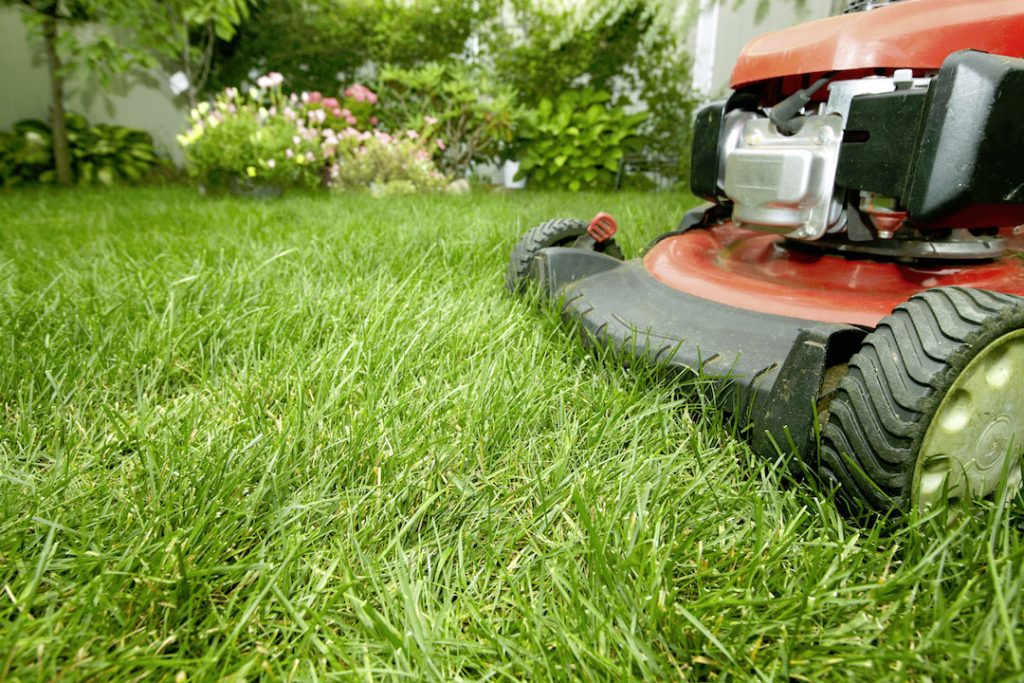
 As the name suggests, push mowers are smaller mowers that you push around your lawn while the spinning blade underneath cuts the grass.
There are two types of push mower, manual and motorised, each with its own advantages and disadvantages.
Manual push mowers are often extremely light weight, manoeuvrable and simple to operate. They have a system of blades on a reel that turns as you push it along, with no buttons or pull cords required to start them.
Ideal for smaller yards, up to 50 square metres, they allow you to control exactly where the grass is mowed, allowing for greater precision along edges and around trees or shrubs.
Manual push mowers take up very little space in the shed and you don’t need to worry about running short of fuel, charging batteries or making a lot of noise.
 They are also usually priced at the cheaper end of the market and can be bought for less than $200.
On the downside, they don’t cope well with long or very thick grass and mowing may be needed two or three times a week during the growing season to keep your lawn looking its best.
Motorised push mowers are more durable, with a wider, heavier deck and adjustable cutting heights.
Most are rotary mowers, which have one or more spinning blades under the cutting deck that cut the grass.
They are powered by engines running on two or four stroke petrol, or you can choose corded or battery electric models.
Motorised push mowers are suited for relatively level yards up to 1000 square metres (or the old quarter acre block) in size.
 They’re best for lawn lovers who have the physical strength and stamina to guide the mower on its path.
Indeed, regularly mowing the lawn can be a good way to get some extra exercise in the great outdoors.
If your lawn area is bigger than 250 square metres, or you get fatigued when mowing, you might prefer a self-propelled mower.
Push mowers vs self-propelled mowers
 Push mowers rely on the operator to move them across the lawn, while the engine allows self-propelled mowers to move under their own steam with you guiding them in the right direction.
Push mowers are better for smaller, flatter areas, while self-propelled mowers take some of the hard work out of covering larger or more hilly sites.
Self-propelled mowers are available two stroke, four stroke or battery.
Choosing the best push mower features
If you’ve ever had to start a temperamental old mower, manually priming the engine and adjusting settings as you repeatedly pull the cord, you’ll be looking for an easier way to do it.
Fortunately, many lawn mower manufacturers have developed starting systems with automatic chokes that start with a single pull, and some even offer push-button electronic ignition.
 The second most important feature is cutting width, which determines how many passes it will take you to cover the lawn and therefore how long it will take you to complete mowing.
Cutting width also has a direct impact on weight and cost – a mower with a wider deck will be heavier, have a bigger engine and be more expensive, as will replacement blades.
Look for a mower with dual or single lever height adjustment so you can easily adjust the height of the blades to suit your lawn’s growth habit across the different seasons.
If you’re not sure a push mower is what you need, take a look at our complete Lawn Mower Buyers Guide here.
Lawn clippings
 Most mowers can be fitted with a catcher that collects lawn clippings to make it easier to put them in a compost bin or trailer for disposal at the dump.
Catchers and bags can be fitted to the side or rear of your mower, but rear mounted catchers are easier to manoeuvre into corners and around obstacles in the yard.
If you prefer to leave your clippings on the lawn, look for a mulching mower, which has blades that cut the grass into very small pieces before spitting it back out. This is best used on finer grasses, such as Zoysia or Couch.
Not sure whether to leave grass clippings on your lawn? Read this article
General mowing guidelines and tips
Whatever type of mower you choose, ensure it performs at its best by following the manufacturer’s operating instructions.
Always wear protective boots and safety glasses when mowing and never touch the blades or engine parts while a mower is running.
Regular maintenance will ensure your mower lasts longer and keeps your lawn looking amazing.
You can read our guide to lawn mower maintenance and troubleshooting here.
Mowing heights
 The general rule of thumb for mowing your lawn is to cut only one third of the leaf each time, and adjust cutting height to the seasons.
During summer, when your lawn will be growing at its fastest, you can cut a little closer to the ground. Try to avoid scalping which puts your lawn under stress and can make it prone to disease, weed or pest outbreaks.
In winter, your lawn should be allowed to grow a little taller to provide insulation against the cold for the roots.
Optimum height and mowing intervals differ between grass types and whether they’re exposed to sun or shade. There’s a guide to the best mowing heights for Buffalo, Zoysia, Kikuyu and Couch lawns here.
 Shade
Shade Maint.
 Drought
 Wear
Wear $12–$18/m²