
 Lawn fungal diseases take on a variety of forms – from brown patches to highly visible spots, threads, rings, or slimes. Once they strike your lawn, fungal diseases can be difficult to treat.
Fortunately, the right lawn care practices can go a long way toward prevention and treatment. In severe cases, knowing how to apply fungicide to your lawn can help eradicate the spores to keep them from spreading.
Fungal lawn symptoms to watch for
First examine your lawn for signs of dampness, squishy roots and stems or fine white threads in your soil.
Then, signs your lawn may have a fungal disease include:
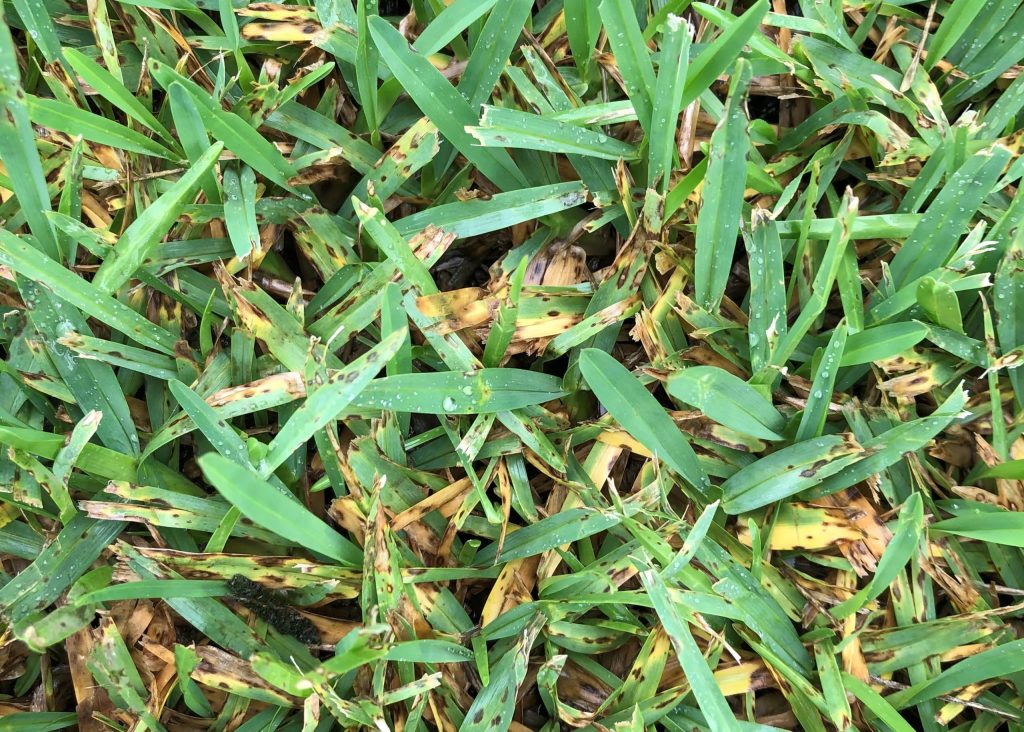
- White, yellow, or brown patches or rings that grow in diameter.
- Thin patches of frayed, distorted, or discolored grass blades.
- Gray, black, red, orange, or purple spots on blades or stems.
- Gray, black, or pink powdery or threadlike coatings on and around grass blades.
- Areas of darkened, wet-looking, slimy, or greasy-looking grass.
What causes lawn fungal disease?
Your lawn is naturally full of fungi and spores, some harmless and some problematic. The right, or wrong, conditions can cause a fungus to erupt into a harmful disease.
The most common causes of a lawn fungal disease are:
- Improper mowing (especially mowing too low/scalping).
- Soil compaction.
- Overwatering
- Too much fertiliser (or using the wrong kind).
- Cold and extended wet periods.
- Warm and humid conditions.
- Drought and stress.
Common lawn fungal diseases
 Usually, lawn fungal diseases are specialised and target specific types at certain times of the year, especially under certain conditions.
For example:
- Brown patch , Black Spot & Lawn Rust occurs during hot, humid weather.
- Fusarium blight prefers hot, drought conditions.
Dollar spot tends to occur when nights are cool, and dew is heavy.
More information on the most common Lawn diseases can be found in our comprehensive article Common Lawn Diseases .
Ways to prevent lawn fungal disease
There are certain lawn maintenance steps you can do to help prevent fungal diseases:
Soil Test: Conducting a soil test can not only identify nutrient deficiencies that lead to stressed lawns and disease but sometimes can be used to diagnose the disease itself. Ask your Local Garden Center for more information.
Aerate: An easy process that helps alleviate soil compaction with small holes in the lawn to allow oxygen, water and nutrients to penetrate deeper into the soil.
Top-Dress: Apply and rake in a layer of organic top-dressing to improve the soil, increase drainage, and help combat lawn diseases.
 Dethatch: Removes thick build-ups of thatch in your lawn and allows the soil to breathe. A good layer of thatch is important for providing cushioning underfoot and allowing your lawn to tolerate and recover from heavy traffic, however during warm and wet weather a thick and dense thatch layer can hold moisture and humidity, creating a perfect environment for fungal infections to thrive.
Grass Type: Choose a lawn that is suited to your climate, soil, and light conditions. Well-chosen lawns are stronger and able to fight off the normal fungal spores native to an area.
Fertilising: Over and under fertilising your lawn can encourage some fungal diseases. Always choose fertilisers that are best suited for your lawn variety and apply them exactly as instructed.
Watering: Water early in the morning to allow your lawn’s blades to dry during the day. Water deeply, but less frequently, to encourage stronger roots and to allow the water to absorb properly. Night watering can cause fungal issues due to moisture remaining on your blades.
 Mowing: Good mowing practices are imperative in terms of maintaining a healthy lawn. Always keep your mower blades sharp and mow to the correct height. Scalped lawns are much more vulnerable to fungal disease. If your lawn has diseased patches, be sure to wash and disinfect the underside of your mower after each use.
Applying fungicides to your lawn
Prior to treating your lawn for fungal disease, it’s important to identify not only whether your lawn indeed has a fungal disease, but to identify the fungus itself.
Not all fungicides treat the same infections, and identifying the correct fungicide is the first step to curing the disease.
First knowing your grass type and recognising the recent weather conditions can make it easier to narrow down.
Your Local Garden Center or myhomeTURF specialist can help identify which fungal diseases are most common in your area, and recommend a treatment. Alternately you could take a photo or a sample of the infected grass to your Local Garden Center for advice.
Fungicides
Lawn fungicides are considered the last line of defence against diseases.
Learning and applying good lawn practices is time well spent in terms of controlling fungal diseases.
Lawn diseases are naturally occurring and are caused by living microscopic organisms in and around the soil.
To best control diseases using fungicides, it is necessary to understand the fundamentals of how lawn fungicides work.
The method of fungicide application can vary greatly and can range from granules to drenches. They may come as dry powders that must be diluted with water or granules that are applied by a fertiliser spreader.
Lawn fungicides do not control or prevent damage to your lawn caused by insects. For this reason, it is important to be sure to determine if your lawn damage has been caused by a fungus, pest, or something else before treating your lawn.
There are two basic types of lawn fungicides:
 Contact fungicides: Remain on the outside of the lawn’s blades and form a protective barrier against diseases that can penetrate the blade. In most cases, they are applied before the disease begins and should not be watered in. They do not have any impact on diseases that enter the lawn through the roots.
An example of a contact fungicide is Chlortan 1Lt liquid which is used for the control of Brown Patch, Dollar Spot and Grey Leaf Spot on lawns. It can also be used on Zoysia, Kikuyu, Couch and Buffalo grasses.
Systemic fungicides: are absorbed by the lawn’s blades. They are both protective and curative before and after the disease has started. The fungicide moves through the blades to reach parts we cannot see or easily reach. As such, systemic fungicides may also be referred to as mobile-systemic or penetrant fungicides.
For instance, to control one of the most common fungal diseases, Dollar Spot, myhomeTURF recommends Posterity Turf 500mL, a long-lasting systemic fungicide, suitable for use on Zoysia, Kikuyu, Couch, Buffalo grasses.
How to apply a fungicide
- First, ready the fungicide label’s instructions.
- Make sure you have all the proper personal protection equipment (PPE).
- Use an appropriate spray kit – according to the label’s instructions.
- Spray the fungicide onto the lawn until the mixture is dripping from the blades.
Organic fungicides
Organic Treatment: Applying organic treatments – such as neem oil, compost tea, or a weak baking soda solution – can help with small patches of fungus.
Conclusion
Fungicides are used to control or prevent fungal disease, if applied quickly enough they can stop the spread of disease and help the lawn recover.
myhomeTURF’s has a wide range of lawn fungicides as well as purpose-built to control fungal infections and diseases in your lawn.

 Shade
Shade Maint.
 Drought
 Wear
Wear $12–$18/m²